Freelance Developer, Agency or In-House Team: How to Choose
Freelance developer, agency or in-house team: honest pros and cons, what to check before you hire, and the red flags that cost businesses money.
Short answer: For a clear project of small or medium size, an experienced freelance developer who works with you directly is usually the most efficient choice: you pay for the work and talk to the person who does it. An agency makes sense when you need several specialists working at the same time, and an in-house team when software is your core business and the work never stops. Whichever you choose, check live projects, keep the code and accounts in your name, and agree the work in writing.
Three ways to get a project built
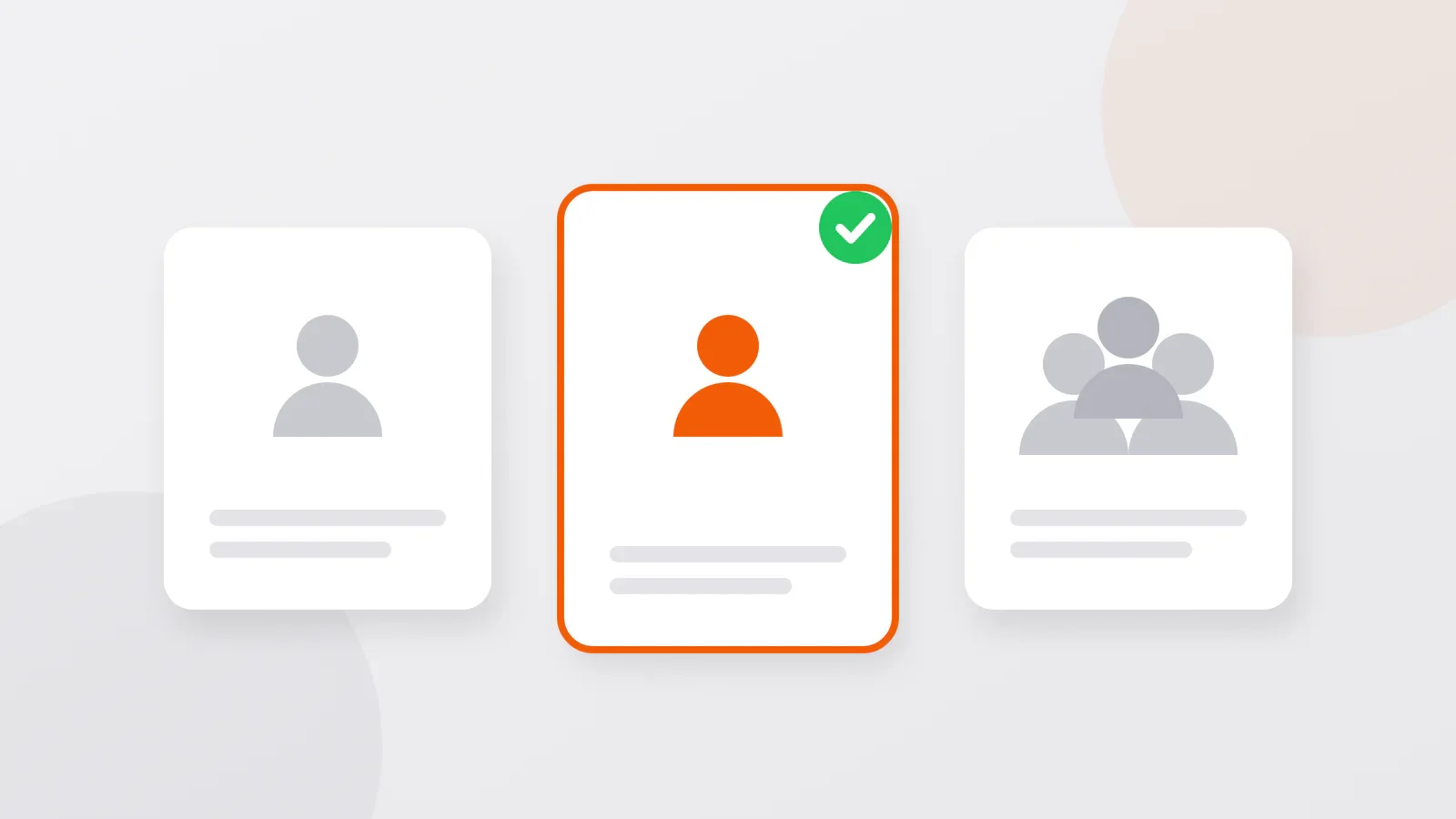
When a business needs a website, a Telegram bot, an app or a CRM (a system for keeping track of customers, orders and the team's work), there are three usual options:
- a freelance developer: an independent specialist who works directly with the client;
- an agency: a company with designers, developers, testers and project managers;
- an in-house team: developers you hire as your own employees.
Here is how they compare in practice.
| Freelance developer | Agency | In-house team | |
|---|---|---|---|
| Who you talk to | The person who writes the code | A project manager | Your employees |
| What you pay for | The work | The work, plus management, sales and the office | Salaries and taxes every month, with or without work |
| Speed of decisions | Fast: one conversation | Slower: requests pass through a manager | Fast once the team exists, but hiring takes time |
| Best for | A clear project: a site, a bot, an app, a CRM | Large projects that need many people at once | Software that is your core product and changes every week |
| Main risk | Everything depends on one person | You may not know who actually does the work | High fixed cost, hard to hire well |
A freelance developer: direct, but check the person
The main advantage is the absence of intermediaries. You explain the task once, to the person who will build it, and nothing gets lost between a manager and a programmer. Questions and small changes don't wait for a meeting. And you pay for the work itself, not for an office and a sales department.
The risks are just as real:
- Capacity. One person can handle only a few projects at a time. If the developer is ill or overloaded, your project waits.
- Range of skills. "Freelancer" covers everyone from a student to an engineer with many years of experience. Many do one thing well, such as design or websites, and either outsource the rest or avoid it.
- Access. If the person disappears and the accounts are in their name, you may lose the code, the domain or the app.
The last risk is the easiest to remove, and the checklist below shows how.
An agency: a team, at a higher price
An agency gives you several specialists at once: a designer, web and mobile developers, a tester, and a project manager who keeps it all together. If someone leaves, another person takes over. For a large project with a tight deadline, where several people must work in parallel, this matters.
The cost of that structure is in the price: management, sales and the office are paid from the same budget as the code. You usually talk to a manager rather than to the developers, so changes pass through more hands. Before signing, ask who exactly will work on your project and whether you can talk to them directly.
An in-house team: full control, constant cost
Your own developers make sense when software is your main product and the work never ends, with new features every week. Knowledge of your business then stays inside the company.
The downsides are cost and time. Salaries are paid every month, whether there is work or not. Finding a good developer takes time, one person rarely covers design, servers, the website and both mobile platforms, and someone on your side has to judge the quality of their work. Many companies start with an external developer and build their own team once the product has proven itself.
Where I fit, honestly
I work directly with clients, without an agency, and I cover the whole chain myself: websites, Telegram bots and Mini Apps, native iOS and Android apps, CRM systems, payments and other integrations, and the servers everything runs on. I have been building products for business for 15 years, and I work remotely with clients anywhere.
A good example is Ahostel.uz, a hostel in Tashkent. Its website with booking, a Telegram bot and Mini App, and native iOS and Android apps all send bookings to one database, so administrators see current occupancy in real time and double bookings are ruled out. When one developer builds all the parts, they fit together by design: one database, the same rules everywhere, one person to ask.
When I am not the right choice: if you need a large team working in parallel on a very short deadline, or a developer sitting in your office every day, an agency or your own team will serve you better.
What to check before you hire
- Live projects, not just screenshots. Open the website, start the bot, install the app. Ask what exactly this person did on each project. My own apps, the blood pressure diary Pressio (App Store, Google Play) and the blood sugar diary Glucio (App Store, Google Play), are available for iPhone and Android, and you can install them.
- Who owns the code and the accounts. The domain, the hosting, the App Store and Google Play developer accounts, the Telegram bot and the contract with the payment provider should be registered to you or your company. The code should be in a repository (online storage for code, such as GitHub) that you can access. More on store accounts in the guide to publishing an app.
- A written agreement. Scope, stages, price, payments, how changes are handled and who fixes bugs after launch. Here is how a project runs, step by step.
- The questions they ask. A good developer asks about your business, customers and processes before naming a price. A price without questions is a guess.
- How the estimate is built. It should list what is included and say whether it is a fixed price or time and materials (you pay for the hours actually spent). Compare estimates by scope, not only by the total: see what drives the price.
- Communication. How fast they reply, in which language, whether they explain things in words you understand. Watch this during the first conversations; it rarely improves later.
- Support after launch. Servers need updates, apps need new versions as iOS and Android change, and real users find bugs. Agree who does this and on what terms. I, for example, fix bugs in the agreed work free of charge for three months after launch.
Red flags
- A firm price before any questions about your business.
- Accounts registered to the developer "for convenience": the domain, the store account, the bot.
- No live projects you can open, only images.
- Guaranteed results such as "first page of Google" or "double sales". Nobody controls those.
- Full payment upfront for a large project without stages.
- Vague answers to "Will I get the source code?"
- Long silences already at the start, when the developer is still trying to win your order.
Frequently asked questions
Is a freelancer always cheaper than an agency?
Usually the same work costs less, because you don't pay for management and an office. But compare what is included: design, testing, publishing in the stores, support. A low estimate that leaves those out is not really cheaper.
Can one developer build a website, a bot and an app?
Yes, if they are a fullstack developer (one who works on both the part users see and the server behind it) and have live examples on each platform. Check those examples separately: being good at websites says nothing about mobile apps.
How do I protect myself if the developer disappears?
Keep the accounts in your name from day one, get access to the code repository, and pay by stages, so you are never far ahead of the work you have seen. Then another developer can continue the project.
Can I hire a developer from another country?
Yes. Most of the work happens in chat and on calls anyway. I work with clients remotely: we discuss the task, and I show the result stage by stage.
Discuss your project
If you are choosing a developer for your project, write to me on Telegram, WhatsApp or by e-mail. Describe the task in a few sentences, and I will reply with questions and an estimate. You can write in your own language; calls are possible in Uzbek, Russian, Turkish or English. A filled-in brief makes the estimate more accurate.
Sanjar Jabborov — fullstack developer, Tashkent. Updated on 13 November 2026.