Blood Sugar Log: Free Printable Sheet (PDF) and How to Use It
Free printable blood sugar log (PDF): a weekly sheet for fasting, before and after meals and bedtime, a 7-point profile, and what doctors look for.
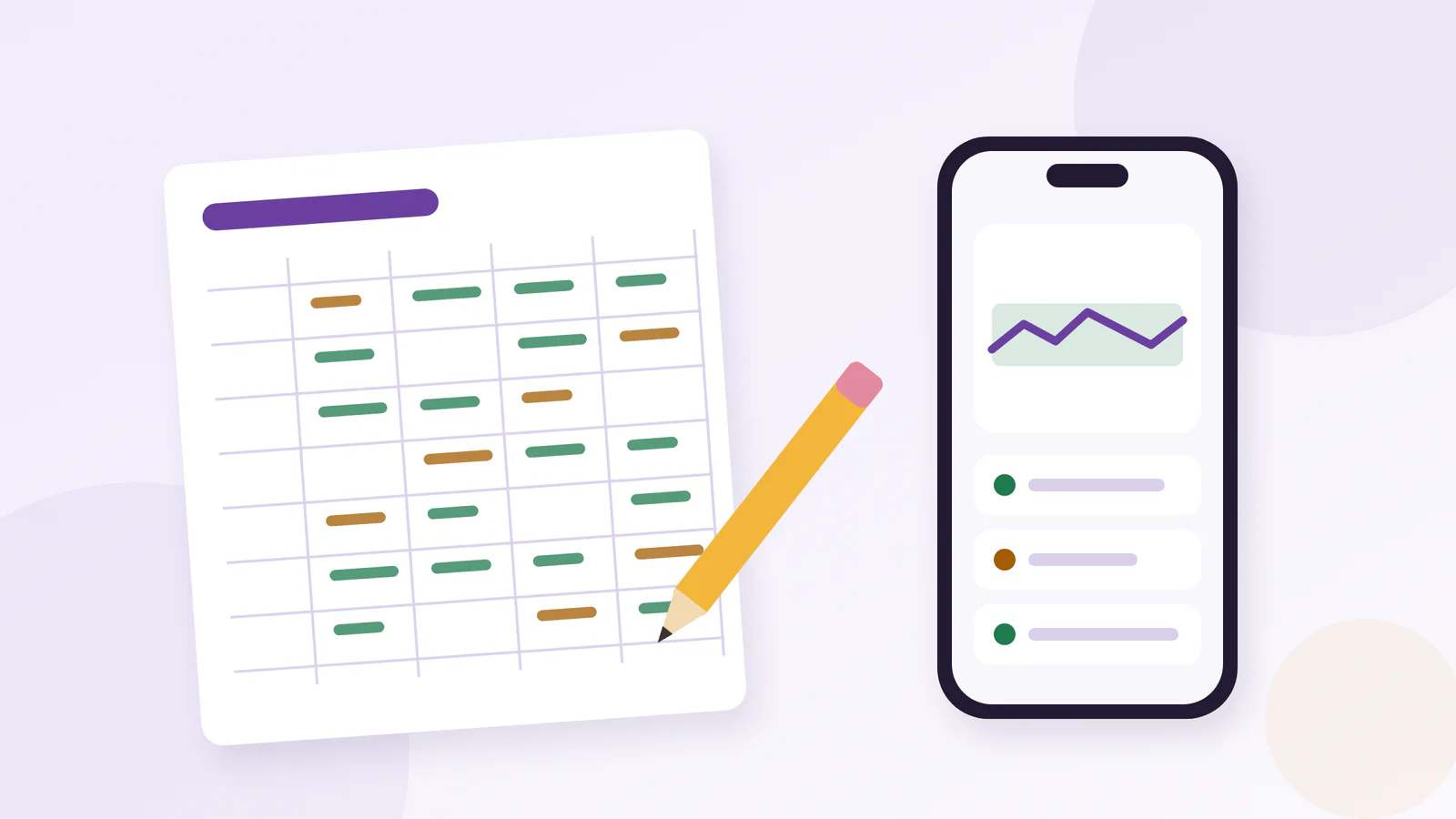
A single blood sugar reading says little. A week of readings written down at the right moments shows your doctor what happens at night, how each meal affects you and whether treatment works. Below is a free log you can print and a short guide to filling it in.
Download the log
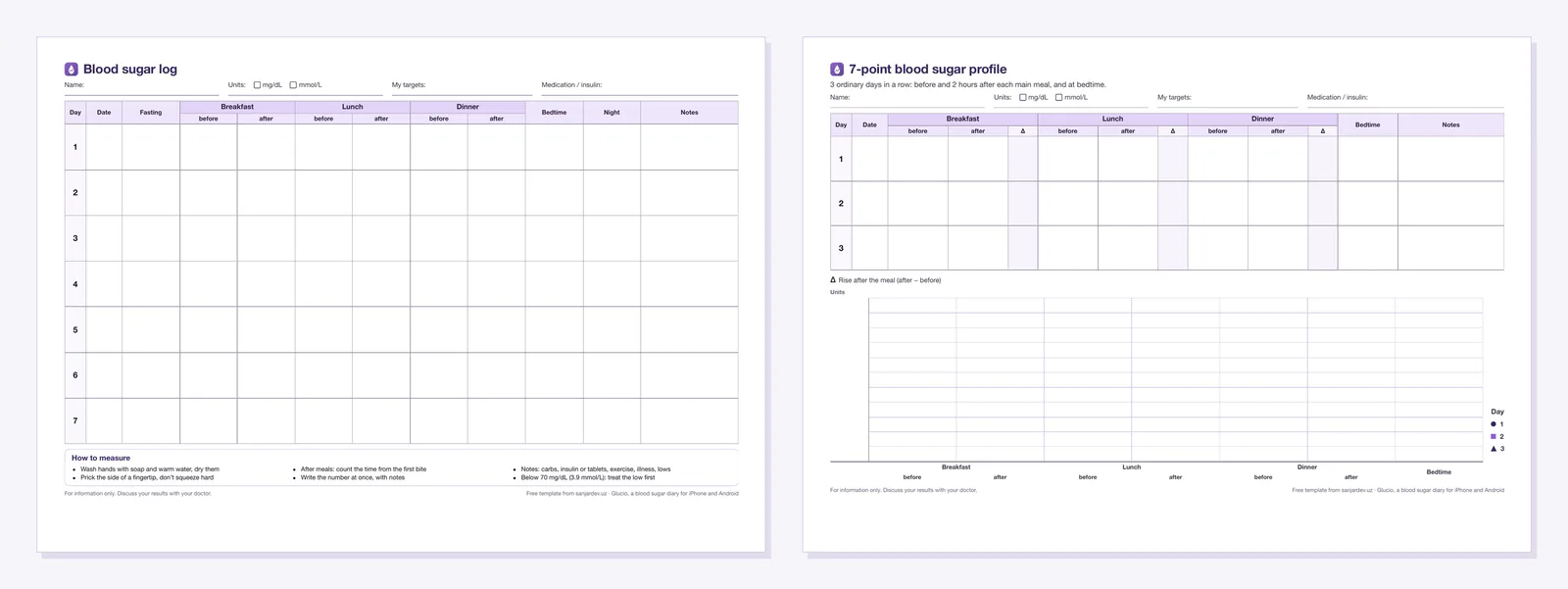
The file has two pages:
- Weekly log: one row per day with columns for fasting, before and after breakfast, lunch and dinner, bedtime and night, plus notes. This is the layout doctors use in paper diabetes diaries.
- 7-point profile: three days of seven readings each, to show how meals affect your blood sugar.
Tick the unit you use (mg/dL or mmol/L) at the top. Print as many copies as you need. The log is free and has no conditions.
What to write down
For every reading:
- the number, exactly as the meter shows it;
- the time, if it differs from your usual one;
- the label: fasting, before or after a meal (and which one), bedtime, night;
- notes: how many carbs you ate if you count them, insulin or tablets and when you took them, exercise, illness, stress, alcohol, symptoms of a low.
The notes often explain the numbers: a high reading after a birthday cake means something different from the same reading after an ordinary dinner.
When to measure
Your doctor will tell you how often. As a guide:
- Fasting: in the morning, before eating or drinking anything except water.
- Before a meal: just before you start eating.
- After a meal: one or two hours after the first bite. Choose one interval with your doctor and keep it the same.
- Bedtime and night: useful if you have lows at night or high fasting numbers.
Always measure with clean, dry hands: how to do it step by step is explained in how to check blood sugar with a glucometer.
The 7-point profile
A 7-point profile shows the shape of a typical day. For three days in a row, measure seven times a day: before and two hours after breakfast, lunch and dinner, and at bedtime. Choose ordinary days, without unusual meals or exercise.
The doctor looks at:
- the rise after each meal — the reading after minus the reading before. It shows which meal raises your blood sugar most;
- the fasting level — whether it stays high from the night;
- lows — when they happen and what came before.
What the numbers mean
For most adults with diabetes, the ADA targets are 80–130 mg/dL (4.4–7.2 mmol/L) before meals and below 180 mg/dL (10.0 mmol/L) one to two hours after the start of a meal. In pregnancy the targets are lower. Your doctor may give you personal targets: write them at the top of the page. The full chart is in normal blood sugar levels.
If a reading is below 70 mg/dL (3.9 mmol/L), don’t wait for your appointment: treat the low now — see low blood sugar: what to do.
Tips that make the log useful
- Write the number immediately. Numbers recalled an hour later are often wrong.
- Don’t skip the "bad" ones. A high reading with a note helps more than a gap.
- Keep the same intervals after meals, so that days can be compared.
- Bring the log and your meter to the appointment: the doctor may want to check the meter’s memory.
Paper or app?
Paper works well, and the sheet above is all you need. An app helps when you measure every day for months: it remembers labels, shows averages and the rise after each meal, and makes a report that is easy to send.
That is why we made Glucio, a blood sugar diary for iPhone and Android. The free version keeps the diary, shows whether each reading is in target and creates a PDF report for the last 7 days in the same table layout as this sheet. The guided 7-point profile with reminders is part of Glucio Pro. Your readings stay on your phone; there is no account and no advertising.
Sources
- Standards of Care in Diabetes—2026, Section 6: Glycemic Goals, Hypoglycemia, and Hyperglycemic Crises — American Diabetes Association
- Standards of Care in Diabetes—2026, Section 7: Diabetes Technology — American Diabetes Association
Written by Sanjar Jabborov, developer of Glucio. Checked against the ADA Standards of Care in Diabetes 2026. Updated on 13 November 2026. This article is for information only and does not replace advice from a doctor.