Normal Blood Sugar Levels: Chart for Adults, Fasting and After Meals
Normal blood sugar levels in mg/dL and mmol/L: fasting, after meals and A1C, the numbers for prediabetes and diabetes, ADA 2026 targets, and why age doesn’t change them.
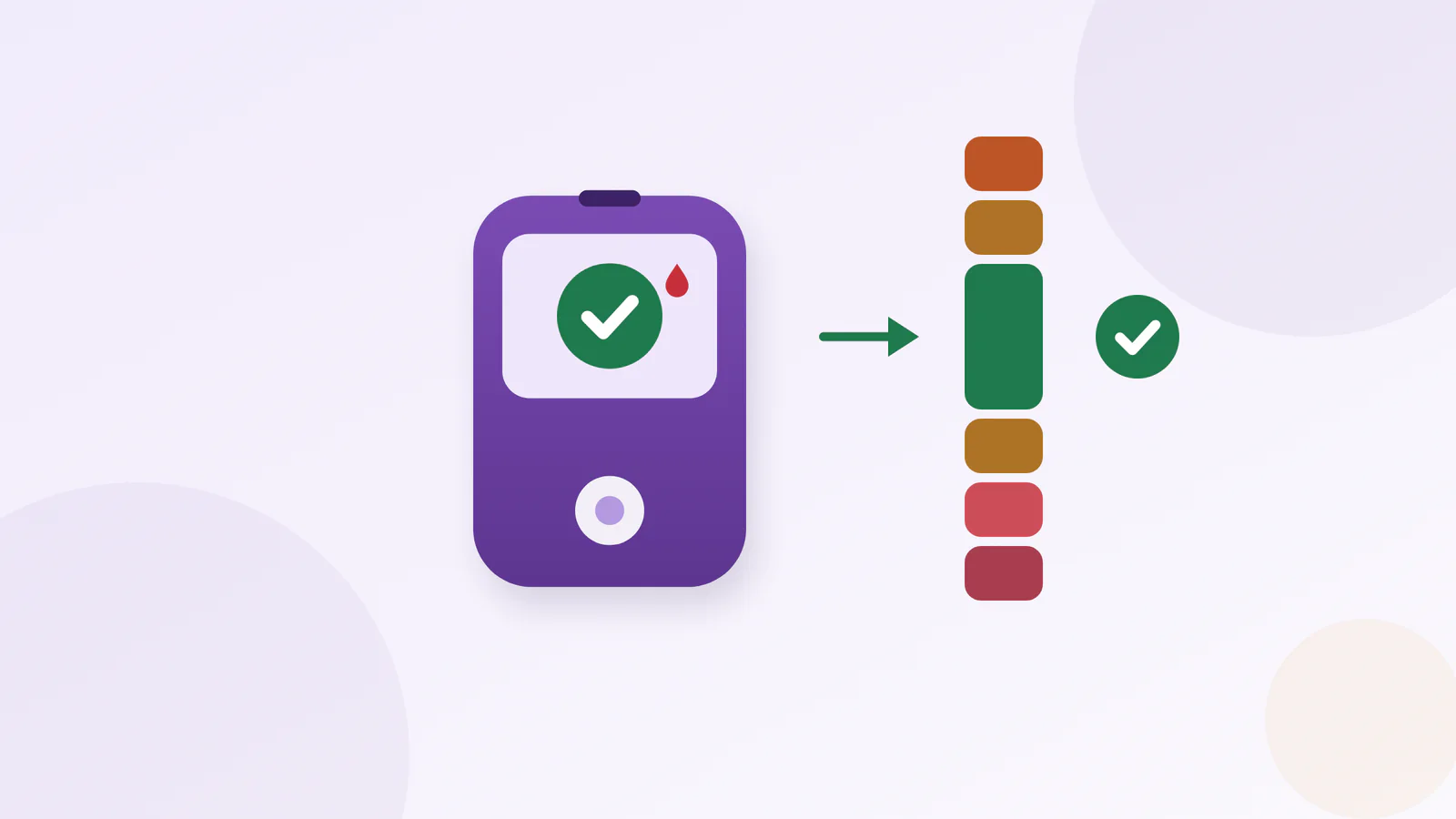
Short answer: in an adult without diabetes, fasting blood sugar below 100 mg/dL (5.6 mmol/L) is normal, and two hours after a meal it usually stays below 140 mg/dL (7.8 mmol/L). For people with diabetes, the American Diabetes Association (ADA) suggests 80–130 mg/dL (4.4–7.2 mmol/L) before meals and below 180 mg/dL (10.0 mmol/L) one to two hours after. These numbers are the same at 30, 60 and 80.
Below is the chart doctors use, how to read numbers in two different units, and when a reading needs attention right away.
Blood sugar chart: normal, prediabetes and diabetes
Blood sugar (glucose) is measured in two units. Many countries, including the United States, Mexico, Brazil, Germany, Italy, Spain, Poland, Turkey and Korea, use mg/dL. The United Kingdom, Canada, the Netherlands, Scandinavia, Russia and Central Asia use mmol/L. To convert, divide mg/dL by 18: 126 mg/dL ÷ 18 = 7.0 mmol/L. Check which unit your meter shows: the same blood can read 126 or 7.0.
Diagnosis in adults (ADA 2026, laboratory tests)
| Test | Normal | Prediabetes | Diabetes |
|---|---|---|---|
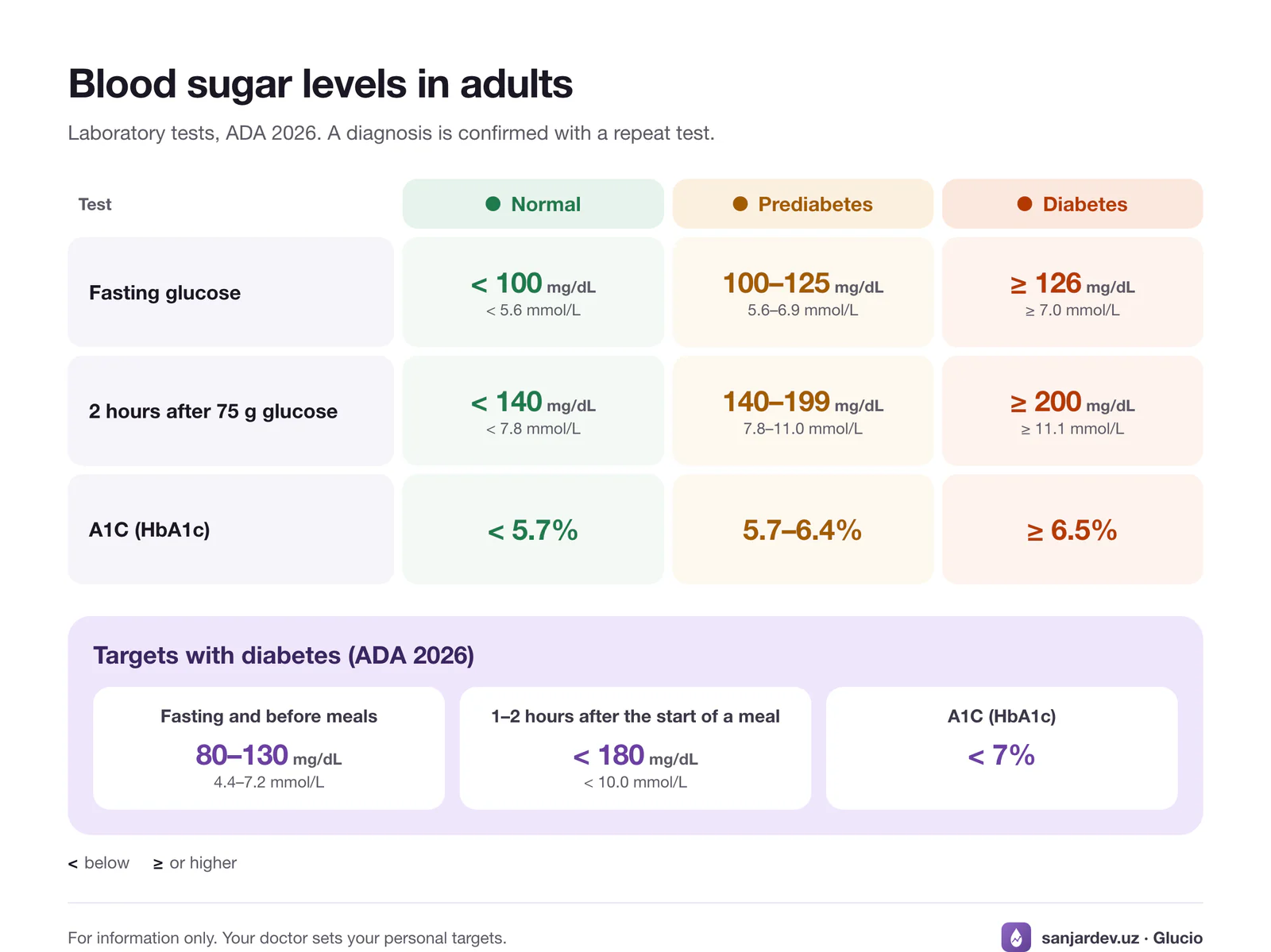
| Fasting glucose | below 100 mg/dL (5.6 mmol/L) | 100–125 mg/dL (5.6–6.9 mmol/L) | 126 mg/dL (7.0 mmol/L) or higher |
| 2 hours after a 75 g glucose drink (OGTT) | below 140 mg/dL (7.8 mmol/L) | 140–199 mg/dL (7.8–11.0 mmol/L) | 200 mg/dL (11.1 mmol/L) or higher |
| A1C (HbA1c) | below 5.7% | 5.7–6.4% | 6.5% or higher |
A diagnosis needs laboratory tests, usually repeated on another day. A home meter is not used to diagnose diabetes: its results may differ from the laboratory by up to 15%.
The World Health Organization uses a slightly different range for impaired fasting glucose: 110–125 mg/dL (6.1–6.9 mmol/L). Many countries follow the WHO numbers, so your doctor may quote them.
Blood sugar targets if you have diabetes
For most adults with diabetes, the ADA Standards of Care 2026 recommend:
| Measurement | Target |
|---|---|
| Fasting and before meals | 80–130 mg/dL (4.4–7.2 mmol/L) |
| 1–2 hours after the start of a meal | below 180 mg/dL (10.0 mmol/L) |
| A1C | below 7% |
These are starting points. Your doctor may set stricter or looser targets depending on your health, your treatment and how often you have lows. If you have been given personal targets, follow them.
Normal blood sugar after eating
After a meal, blood sugar rises and peaks roughly one hour after you start eating. In people without diabetes it usually returns below 140 mg/dL (7.8 mmol/L) within two hours. For people with diabetes, the ADA target is below 180 mg/dL (10.0 mmol/L) one to two hours after the start of the meal.
What matters most is when you measure: count the time from the first bite, not from the end of the meal, and measure at the same interval every time so that the numbers can be compared. How to plan the day is explained in our printable blood sugar log.
Do normal blood sugar levels depend on age?
No. You will find tables online with a separate "normal" for people in their 40s, 60s and 80s. Current guidelines don’t have them: the thresholds for diabetes and prediabetes are the same for every adult.
What changes with age is the risk: high blood sugar becomes much more common as people get older. And for older people with other health problems, doctors often choose less strict treatment targets to avoid dangerous lows. That is a decision about treatment, not a new definition of normal.
The numbers are also the same for women and men. Pregnancy is the exception: the targets are much lower, see gestational diabetes: blood sugar levels.
A1C and average blood sugar
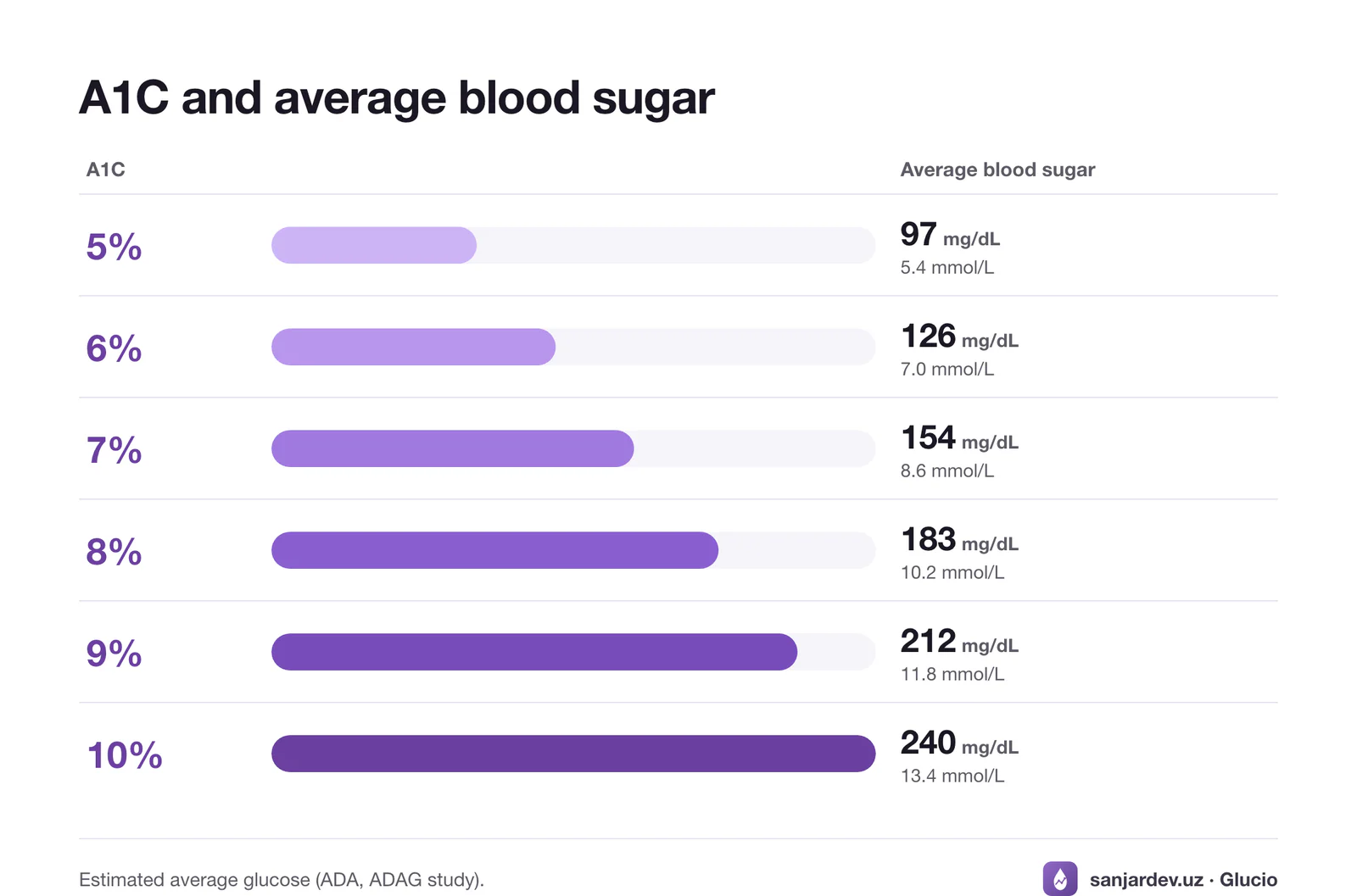
A1C (HbA1c) shows your average blood sugar over the last two to three months. The ADA converts it into an estimated average glucose:
| A1C | Average blood sugar |
|---|---|
| 5% | 97 mg/dL (5.4 mmol/L) |
| 6% | 126 mg/dL (7.0 mmol/L) |
| 7% | 154 mg/dL (8.6 mmol/L) |
| 8% | 183 mg/dL (10.2 mmol/L) |
| 9% | 212 mg/dL (11.8 mmol/L) |
| 10% | 240 mg/dL (13.4 mmol/L) |
A1C is also reported in mmol/mol in many laboratories: 7% equals 53 mmol/mol.
When a reading needs attention right away
- Low: below 70 mg/dL (3.9 mmol/L) is low blood sugar, below 54 mg/dL (3.0 mmol/L) is a serious low. Act at once: see low blood sugar: what to do. If the person is unconscious or cannot swallow, call your emergency number and do not give food or drink.
- High: if your blood sugar stays above 250 mg/dL (13.9 mmol/L), or it is high and you have nausea, vomiting, stomach pain, fast deep breathing, strong thirst or confusion, contact your doctor urgently or call your emergency number. If your doctor has told you to check ketones, do it as instructed.
Before acting on a single unexpected number, wash and dry your hands and measure again: sugar on the fingers is the most common cause of a falsely high reading. Our guide on how to check blood sugar with a glucometer shows how to avoid such errors.
How Glucio helps
We make Glucio, a blood sugar diary for iPhone and Android. You enter the number from your meter and a label — fasting, before a meal, after a meal — and Glucio shows whether the reading is in target by the ADA 2026 table, by the ADA pregnancy table or by the targets your doctor gave you. It works in mg/dL, mmol/L and g/L and estimates A1C from your readings once there are enough of them.
Glucio does not measure blood sugar and does not calculate insulin doses. It keeps a clear record for your doctor.
Sources
- Standards of Care in Diabetes—2026, Section 2: Diagnosis and Classification — American Diabetes Association
- Standards of Care in Diabetes—2026, Section 6: Glycemic Goals, Hypoglycemia, and Hyperglycemic Crises — American Diabetes Association
- Diabetes: fact sheet — World Health Organization
- Translating the A1C assay into estimated average glucose values — Diabetes Care, 2008
Written by Sanjar Jabborov, developer of Glucio. Checked against the ADA Standards of Care in Diabetes 2026. Updated on 13 November 2026. This article is for information only and does not replace advice from a doctor.